Skip to main content
Main navigation
Find a Doctor
Locations
Services
Patients & Visitors
Patient Services
Patient Services
Questions About Your Bill?
Urgent Care
Where to Stay
Patient & Family Services
Visitor Policy
COVID & Vaccine Information
Clinical Trials
University of Utah Hospital
Main navigation
University of Utah Hospital
Staying at the Hospital
Parking & Valet
Looking for Another Location?
General Questions
Main navigation
801-581-2668
Find an Interpreter
About U of U Health
Billing & Insurance
My
Chart
Search
Menu
Close
Service line menu
Find a Doctor
Services
Locations
Patients & Visitors
Patient Services
Questions About Your Bill?
Urgent Care
Where to Stay
Patient & Family Services
Clinical Services
COVID & Vaccine Information
University of Utah Hospital
University of Utah Hospital
Staying at the Hospital
Parking & Valet
Looking for Another Location?
General Questions
801-581-2668
Find an Interpreter
About U of U Health
Billing & Insurance
MyChart
Search
Breadcrumb
Health Care Home
HealthFeed
2018
12
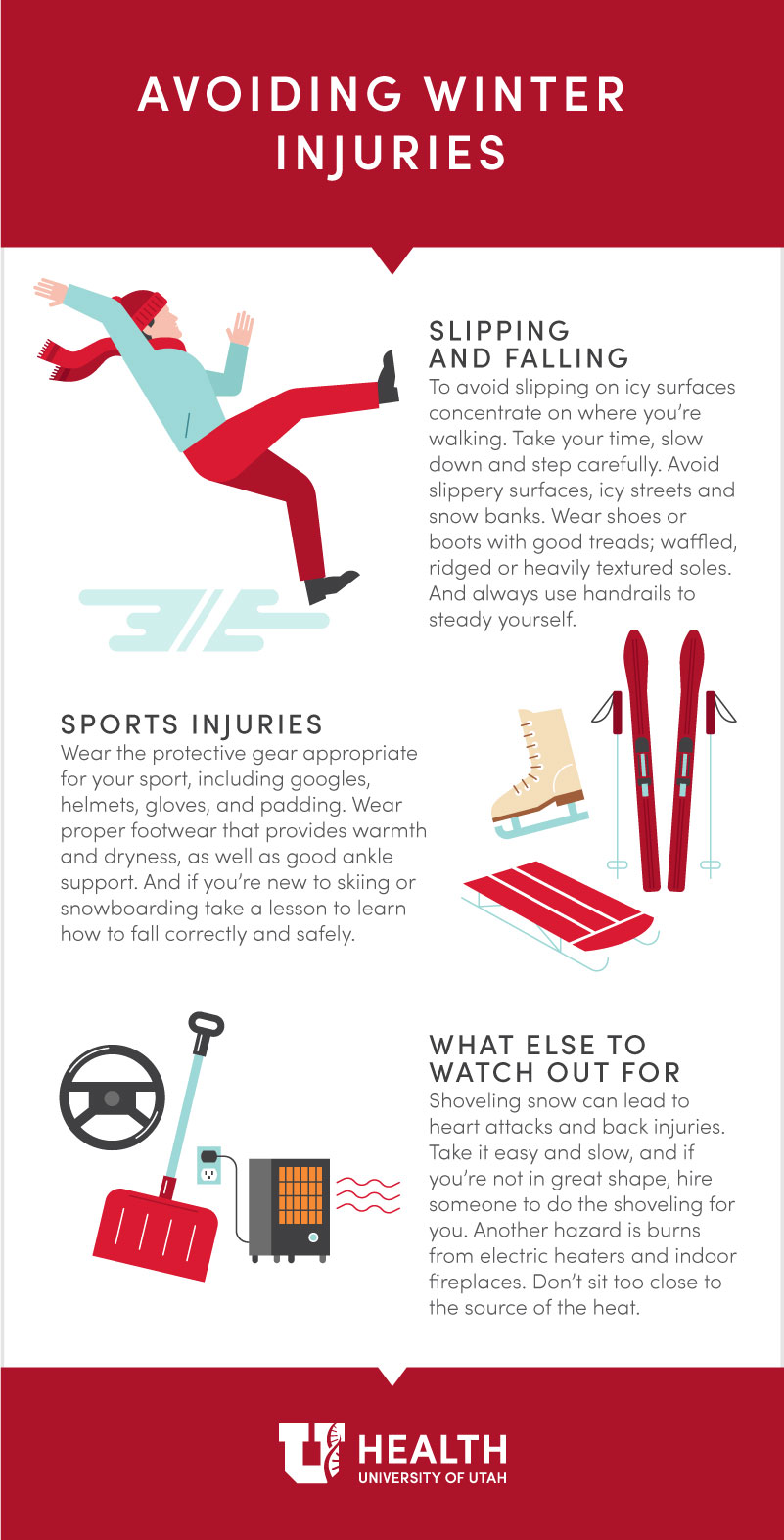
Avoiding Winter Injuries
Dec 27, 2018
You don't want to spend the winter recovering from an injury.
diabetes
erectile dysfunction
men's health