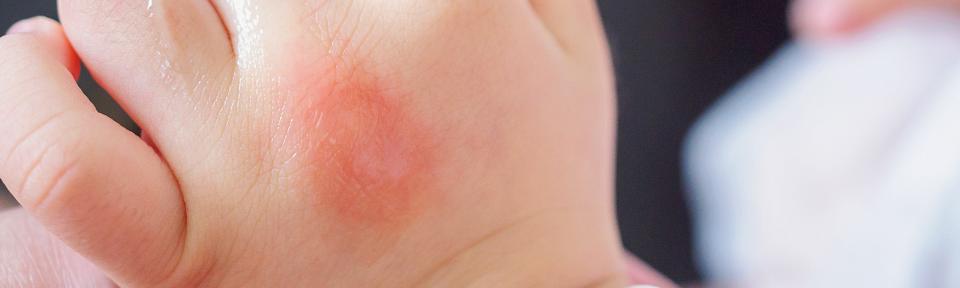
Preventing and Treating Mosquito Bites in Children
The warmth of summer also brings swarms of mosquitoes. The pesky bugs can cause discomfort and potentially carry serious illness.
Planting mosquito repellent plants, such as lavender and lemongrass, in your garden won’t keep them all away. Alanna Brickley, MD, a pediatrician at University of Utah Health, shares ways to protect your family.

Mosquito Bite Prevention
1. Pick your insect repellent wisely
Look for products that contain an EPA-registered active ingredient such as DEET, picaridin, or oil of lemon eucalyptus.
If your repellent contains DEET, choose one with up to 30% DEET. A higher concentration can cause skin rashes and is not recommended to use on young children.
Insect repellents with picaridin offer similar protection as DEET. Repellents that contain 5% picaridin protect up to four hours, while repellents that contain 20% picaridin protect up to 12 hours.
Repellents made with oil of lemon eucalyptus are not recommended for children younger than 3 years old. Products with 8%-10% concentration protect up to two hours, while products with 30%-40% concentration protect up to six hours.
Most importantly, read the label and follow directions. Do not spray insect repellent directly in the face. A parent should spray repellent on their hands and then apply to a child’s face.
2. Avoid insect repellent on children younger than 2 months old
We want to do our best to keep babies safe. It’s best to avoid insect repellent and cover them up with light, long-sleeved clothing. A mosquito net can also provide additional protection.
3. Avoid combo products
Using a product that contains both sunscreen and insect repellent is not recommended in children. Because sunscreen needs to be reapplied every two hours, a combo product could expose your child to too much insect repellent. It’s best to keep the two products separate. Apply sunscreen first and insect repellent second.
4. Layer Up
Dress your child in light clothing that covers their arms and legs. Mosquitoes like to bite around the wrist and ankles, so it’s wise to cover those areas. And yes, it’s okay to spray insect repellent on your clothes, but keep in mind that DEET products can potentially affect fabric with a plastic component (ex. Rayon, spandex). It is also not recommended to apply insect repellent underneath clothing.
You can also use 0.5% permethrin to treat clothing or buy permethrin-treated clothing. Permethrin is an insecticide that kills or repels mosquitoes.
Treating a mosquito bite
Whether you have a mild reaction or experience redness, soreness, and swelling, follow these tips if you’re suffering from a mosquito bite.
- Wash the area with soap and water.
- Apply an ice pack or ice cube for 30 seconds.
- Use an over-the-counter anti-itch or antihistamine cream to relieve itching.
If a mosquito bite becomes infected (spreading redness or more significant swelling three to four days later), reach out to your doctor right away.

When Does Your Child Really Need Lab Work?
Parents often ask about blood tests during routine pediatric visits, but pediatrician Cindy Gellner, MD, clarifies that healthy children rarely need them. She shares some of the criteria for screenings in young patients and how insurance factors into decision-making.

What to Do When Your Baby Sounds Congested
Newborns cannot blow their noses, and they are not great at breathing through their mouths either—so even a little mucus can sound dramatic. Pediatrician Cindy Gellner, MD, shares what is normal when it comes to newborn sneezing and snorting, how to use saline and suction safely, and when to check in with your pediatrician.

Understanding Childhood Mood Disorders Beyond Bipolar
Is your child often irritable or prone to temper outbursts? Pediatrician Cindy Gellner, MD, clarifies the distinctions between bipolar disorder and Disruptive Mood Dysregulation Disorder (DMDD), emphasizing the importance of accurate diagnosis in childhood mood disorders.


More Answers to Your Questions on Keeping Your Kid Healthy and Happy
Latest trends and issues in children's health on the Healthy Kids Zone with Dr. Cindy Gellner
