Episode Transcript
Interviewer: Protecting yourself and others against COVID-19. It seems like the further and further we get into the pandemic, the more ideas and more things people are doing to protect themselves.
But Dr. Richard Orlandi from University of Utah Health says, actually, some of the best things you can do to protect yourself and others just come right back to basics. Can you give us an idea of what the hierarchy of things are that we really should focus on that we know protect ourselves and other people?
Dr. Orlandi: Staying physically distant from one another. People have called this social distancing, and I prefer the term physical distancing, because we still want to interact with one another. But the idea of staying six feet apart so that if I cough or sneeze, that's not going to hit you, or if you cough and sneeze, it's not going to affect me. We know that that's how this virus is spread is either through respiratory droplets being sprayed out or if I touch my eye, my nose, my mouth, get those respiratory droplets on my hand, I touch your computer and then you type and then you touch your eye. And so that's how those things are happening. So that physical distancing is really important.
When we're not able to be physically distant, masking is important. Now, a couple of weeks, you and I talked about how masks were not as important because we were thinking of them in terms of I'm going to put a mask on so you don't get me infected. But we're changing the way we're looking at that, and really I'm going to put a mask on so I don't infect you, even if I don't have any symptoms, because we now are understanding that people may be able to transmit this virus the day before or a couple of days before they really have that fever, muscle aches, shortness of breath, coughing type of flu-like symptoms. That's going to help so that when I go to the store, I'm not spreading it to everybody else. Now, if all of us do that, we're keeping one another safe, and that's a great way that we can show our citizenship, our care for one another.
Interviewer: So it comes down to droplets, keeping your droplets away from other people, keeping other people's droplets away from you. And you do that by physically distancing yourself and also remembering not to touch your hands to your eyes, your nose, or your mouth. But Dr. Orlandi says this time of year, in particular, that can be really challenging.
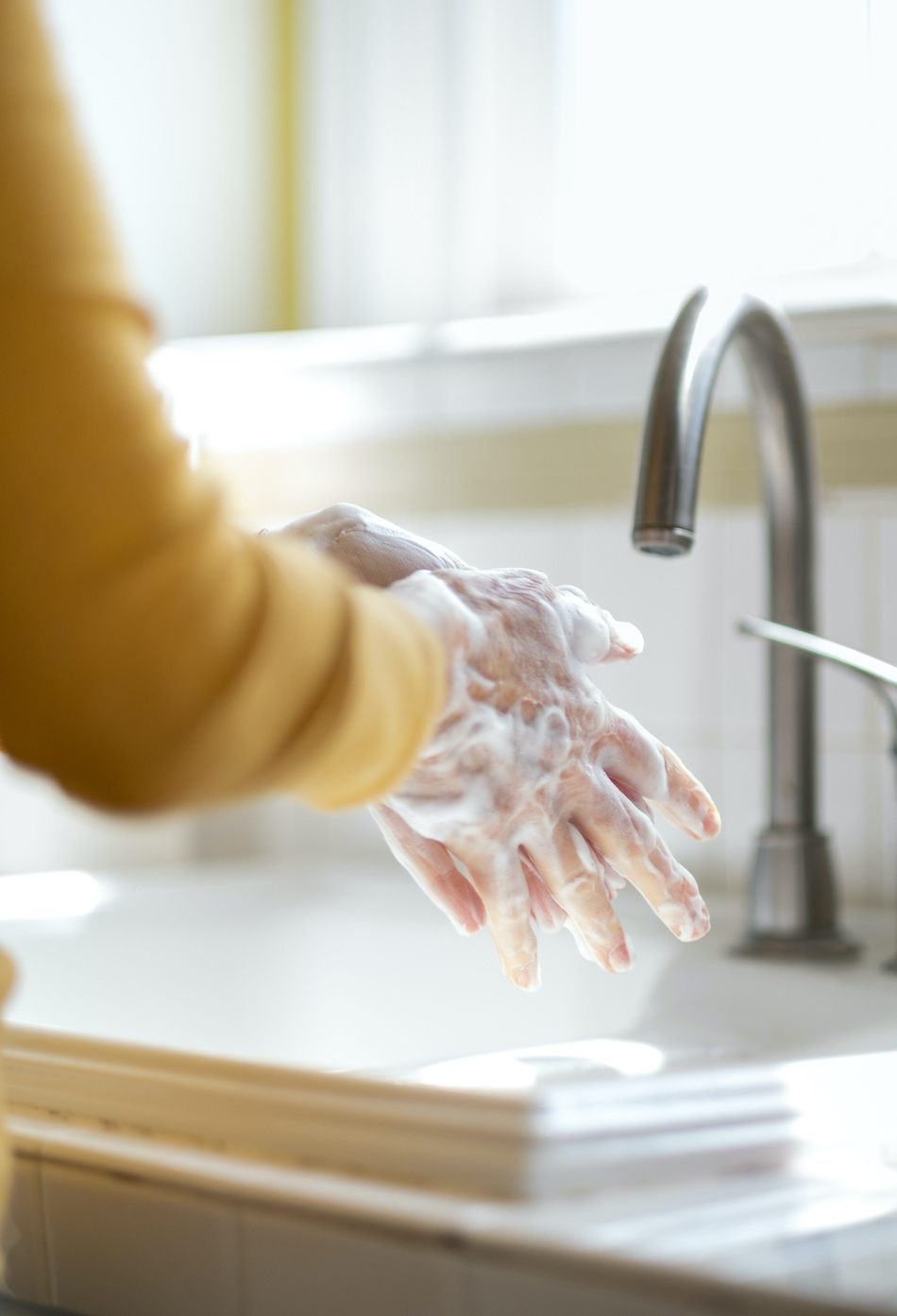
Dr. Orlandi: Doggone it. In allergy season, what happens? Your nose itches. Your eyes itch. Try to avoid doing that. Or if you do it, if you rub your eye and you rub your nose, just hand sanitize afterwards. Hand washing is so important. Sanitizing the surfaces around you. If you work in an office where a lot of people are still coming to work, get those wipes out and wipe down your work area. Wipe down the doorknobs and things like that where we're all commonly touching.
Interviewer: And if we all keep it up and do it really, really well, it will make a difference.
Dr. Orlandi: Literally, what people are doing here in Utah, it's saving lives. And I would say stay physically distant but socially close. Check on your neighbors, check on your family and stay connected, but do it in different ways. Do it through video platforms. Do it through the phone. Go for a walk. Stay six feet away from one another. If there are things that we can do to slow down the spread of that virus, that's probably the best thing we can do for our healthcare systems and for our society and to get our economy back up and running as fast as we can.
This information was accurate at the time of publication. Due to the changing nature of the COVID-19 pandemic, some information may have changed since the original publication date.