TRAILS: Technology Recreation Access Independence Lifestyle Sports

TRAILS: Technology Recreation Access Independence Lifestyle Sports
Adaptive Sports: Redefining Wholeness & an Active, Healthy Lifestyle
Recreation
Participants can stay active through indoor spinning, hand cycling, kayaking, sailing, target shooting, downhill skiing, cross-country skiing, swimming, and wheelchair tennis. TRAILS is designed to prepare individuals of all ability levels to engage in active living through recreational experiences. These opportunities and resources will help bridge the gap between rehabilitation and returning to the community.
Spinal Cord Injury Forum
The Spinal Cord Injury (SCI) Forum is an six-week educational program for individuals with spinal cord injury, personal care providers, family, and health care professionals. The focus is on physical, emotional, intellectual, social, and spiritual wellness. Topics include: advocacy, health promotion, nutrition, psychosocial issues, sexuality, assistive technology, transportation, recreation, women's wellness, aging, and disability.
Spinal Cord Injury Wellness
Spinal Cord Injury (SCI) Wellness is an innovative component that provides individuals with spinal cord injury an opportunity to participate in a comprehensive wellness program that includes exercise/conditioning, weight management, nutritional consultation, massage, upper extremity preservation, health risk management, yoga, circuit resistance training, driving simulation, and brain gym.
This unique opportunity eliminates barriers for participation, provides access to fully accessible equipment, knowledgeable and experienced supervision, financial accessibility, and socialization.
TRAIL Talk is a monthly continuation of the SCI Forum and meets monthly to discuss a variety of topics.
Virtual Outreach
One of the greatest challenges for spinal cord injury care is the barrier of distance between rural areas and the hospital. Virtual outreach consists of web-based and telemedicine/telehealth links that enable expanded medical and outreach consultation and education services to all parts of the region.

Meet Our TRAILS Participant
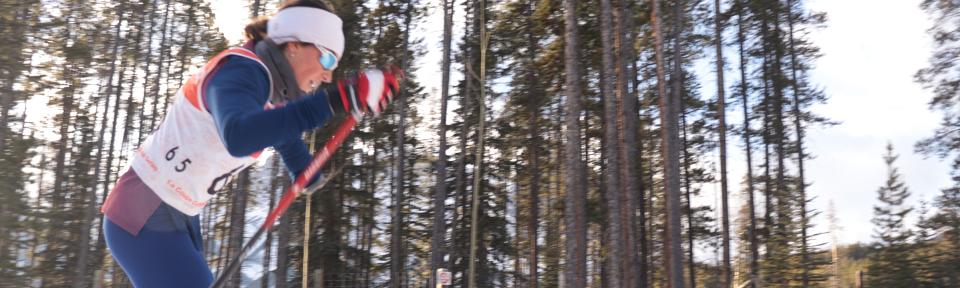
Para Nordic skiers and TRAILS participants, Dani Aravich and Drew Shea, trained hard to earn themselves spots on Team U.S.A. for the 2022 Beijing Paralympic Games. Both of them were fairly new to the Para Nordic skiing world when they fell in love with the sport. With the help of training on Team Soldier Hollow and coaching from Tanja Kari, TRAILS program director, Aravich and Shea were able to learn techniques and skills that take most athletes years to develop.
Hear From Our Specialists
Learn About the TetraSki
Paralympian & Program Administrator, Tanja Kari, Talks About TRAILS Program on Good Things Utah
Heard on the Radio
Adaptive Sports Just Got Easier With Infusion Of Bio Technology
Jeffrey Rosenbluth, MD, talks about biotech innovations so those with complex physical disabilities, namely quadriplegics, can participate in skiing and watersports. The program's technology features the TetraSki and the TetraCraft. Courtesy of KPCW Radio
Transcription
KPCW and Park City,
this is Cool Science
Radio. Science and
technology that's
accessible and entertaining.
If we can understand
it, you can understand
it. I'm Lynn Ware Peek.
And I'm John Wells.
Our guest, Dr. Jeffrey
Rosenbluth, is the
founder of Tetradapt
at the University of
Utah's Rehabilitation
Center. Jeffrey is a
professor of spinal cord
medicine, and through
his work at the
university, he partners
with the colleges of
mechanical engineering,
computer science,
architecture and
planning, business,
and health to design
cutting-edge technology
and provide essential
programs that improve
the quality of
life for individuals
with disabilities.
Today, he and his team
will be demoing his
new biotech innovation,
the TetraCraft.
And last winter, he
had the TetraSki on
the ******. He says
it's a paradigm shift
for those with
disabilities, and it's
groundbreaking work to
advance technology for
people living with
complex disabilities.
Jeffrey
Rosenbluth, welcome
to Cool Science Radio.
Thank you so much.
tetradapt this is this
little engineering
zone within the university
of utah rehab center
that you founded and
i first found out
about you last winter
with a tetra ski for
adaptive athletes and
now you're back with the
tetra craft uh that
you're demoing on east
canyon reservoir today
from 10 to 2 and boy
i almost don't know
where to start so why
don't we start with
today tell us about the
tetra craft so it's a
tetra watercraft and so
this is a modified
uh hobie kayak slash
sailboat and so we take
uh an existing hull and
and and watercraft and
then we modify it for
use for folks with
fairly complex physical
disabilities and so the
the whole word tetra
meaning four meaning
that all four limbs
are affected with some
degree of paralysis so
these are individuals
that really couldn't
use any type of typical
watercraft. And we've
modified this with
motors for steering and
motors for sail control.
And that enables
folks to be able to
use other input devices
like just their mouth
and breathing and
switches and joysticks
to be able to control the
boat just the same way
you would be able to
without a disability.
So what was the genesis
of all of this, because
I know the Tetris
ski is very much the
same where they're
controlling with their
mouth or even blowing,
be able to direct the
craft, whether ski or
watercraft. Where was
the void that you saw
in adaptive technology
that turned on a
light for you and made
you know the direction
you wanted to go?
Sure. Yeah, it goes way
back to the 80s. And so
I actually in college
got involved with
teaching adaptive sports
and adaptive skiing
before I I went to medical
school and, you know,
really saw the impact
of these sports, went
all the way through
medical school and to
my position in rehab
and then really kind
of went back to sports
again because it's
just such a powerful
thing. There's so many
people that are injured
whose identity is
wrapped up in a lot of
the activities, the
hobbies, the sports that
they do. And it seemed
like from my time back
in the 80s till
currently there's been,
you know, some technology
that's been very
impressive, but in
many ways, some of the
technology has left
behind people with more
complex injuries. And
we have a lot more tools
now to address that
and a lot of areas that
I thought we could
still improve. And so we
really started to
specialize, I would say,
in that most complex
individual that there
really wasn't anything
out there on the market
for them to participate
or participate
at least at the same
level of performance and
independence as
everyone else getting on
the ski mountain getting
on the reservoir or
the lake is is a job
in itself so uh let's
talk about that but
but before we do uh the
tetra watercraft is
looks like a hobie cat
and they can use either
choice joystick or
mouth control for
independent control of
steering sail management
and in this case
electric propulsion as
well so uh you have a
configuration that
doesn't necessarily use
sails it's just uh
electric propulsion correct
yeah that's why we
um at least for right
now we're calling it
a watercraft because
it's not just a kayak
and it's not just a
sailboat it can do both
but i think if you're
a power wheelchair
user and you want to go
kayaking you know kayaking
would be with power
and so that's that
was kind of the the
thinking behind that
also and it's pretty nice
on a on a non-windy
day to still be able
to take out the boat
and have a great time.
Or certainly when
it's too windy and you
really can't use the
sail when you're trying
to maneuver in through
the marina or to come
to the beach, you can
still independently
take this boat in any
conditions with the
power part of it into
and away from shore as
well. So every part
of the experience can
be independent. That's
the Tetra watercraft.
And then you have
designed, built, and
deployed a powered
accessible docking system,
PADS, pads to sort of
maximize your access
to the lakes and the
reservoirs. Can you tell
us about that? That's
quite an apparatus.
Absolutely. So I think
you're starting to
get into our thinking
pattern, which is really
just to pick away at
every little issue
that's keeping people
from participating.
And so we really
didn't like the lack of
ability for individuals
with disabilities to be
able to even use boats
to get on boats, or
even the process of
getting into our Tetra
watercraft involved,
you know, multiple
people and transferring
from a chair to the
boat. And so we thought
there must be a more
elegant way to do
it. And so we had the
engineers at the
university help us design a
large, it's relatively
large, it's 30 feet
by eight feet. And
it's really, it looks a
lot like a patio boat.
It's a large platform
that's free of
obstructions and you can
maneuver on a wheelchair.
And there's a rolling
ramp that rolls from
the shore all the
way onto the boat. And
so it's like ADA access
to the boat. And then
once you're on there,
all of the other
boats can be accessed.
So there's a side lift
and a back lift, and
we can bring the
smaller boats into the
mothership, into the
big boat, and do a very
easy level transfer from
their wheelchairs to
the boat, and then
really gracefully drop
people down into the
water with these electric
lifts. And then they're
often going with
their electric boats.
And so it's just this
really beautiful,
graceful, seamless
experience that hasn't
really been seen before.
When you say it hasn't
really been seen
before, and it's the
world's first, same as your
SIT ski, the Tetra
ski, especially because
we're so closely associated
in Park City with
the National Ability
Center, we've seen a
lot of different types
of adaptive technology
and things like SIT
skis. But what makes
it different? You know,
did you have people
coming to you, like
the National Ability
Center, saying, how do
we get one step further?
Yeah, this is mostly
driven from our patients.
And so my primary day
-in and day-out job
is the physician for
individuals with spinal
cord injury. And I've
been out here in Utah
since 2001. And we've
developed an adaptive
sports program over
the years. And I've had
some patients come
to me directly when I
encourage them to participate
and say, you don't
actually have something
in your program
that I would enjoy. And
so I challenge you to
design something. I've
had a number of patients
tell me, I would be
happy to play with
you guys if you could
design something that
would be fun for us.
And so that was really
the motivation behind
it. And looking into the
gear that was on the
market already, it
really didn't accommodate.
There definitely are
products where you can
take someone with a
very significant
disability and put them on
the water or put them
on the hill, but it's
very dependent. It's a
very dependent activity
where you're highly
at the mercy of the
instructor to help
with steering and speed
control and all that.
And it's that element of
independence, of
autonomy and performance
that I think people are
really motivated by.
So you had a great
piece on a national news
program about the
Tetra ski last March, I
think it was, and you
were featured in it along
with a skier who
had, I believe he was
involved in a ski
accident and became a
quadriplegic, is that
right? That's correct. He
loved to ski, and he
hasn't been able to since
then, and it's a
very emotional piece,
really. It's incredible
and very inspiring. Was
he an example of a
patient that said to
you, you know, if only
I could dot, dot, dot?
He actually
wasn't. He just
assumed that he
couldn't ski.
And so he didn't
even know enough
to suggest that
he, you know, he'd
want to get back
out there again.
And so he was really
surprised. He didn't
really think the
technology would be
available that would
give him a similar
experience. And he was
almost, I would say,
even a little
reluctant at first to
think of it as something
that would give
him that same thrill
that he had before.
And that was the biggest
surprise to him and
to us is how exactly
the same it is to the
skiing that he was
doing before in terms of
all those sensations
of gravity and cold and
wind and just the
beauty of being outside.
So for our listeners,
you have the power
accessible docking
system, which allows them
access to the reservoir
or to the lake. You
have this boat that
can be sailed or it
could also have electric
propulsion, and they
have independent
control of steering. But
you just don't let them
go and do their thing.
You're watching
them from the shore
because I believe you
have some sort of wireless
remote control. Can
you talk about that?
Yeah, great. Glad
you brought it up.
There's a lot of safety
systems. We really
don't want anything
to go wrong, and we
recognize there could
be some failures in
the system. So for
some of our folks,
let's say on the
watercraft, some of them
are actually on
ventilators, and we're
actually out there in
the boat with them,
and they're freely
sailing and doing what
they want, but we're
there as backup.
For some of the
folks that don't
need as much close
medical attention,
we actually have this
wireless remote system.
It looks a lot like
a PlayStation remote
control, and we can be
on a personal watercraft
or another boat.
and just be close by
to be able to take
over if there was some
sudden gust of wind or
they lost control or
even the sip and pop
device maybe even fell
out of their mouth and
they couldn't control
it we could just
safely bring it over to
us and and help out
in that situation and
that's available for
the ski also so there's
an instructor that does
go out on the lesson
and there is actually
a tether that's
connected just in case
there was some catastrophic
failure in the system
but the idea is to
really never need to
use the tether and
there's a remote control
system in case someone
puffs instead of sipping
or sipping instead
of puffing, and we
need to quickly control
their direction
before they go over
anything dangerous. Lynn
and I both enjoy skiing
very much. We enjoy
the craft of skiing.
It's fun. It's good
exercise, but we really
love the independence
and being out in these
extraordinary mountains
here in the Wasatch
system, and we both
independently watched
on your website the
video you had of all
these different angles
showing the skier coming
down the hill from
the perspective of the
person who was
tethering him, from the
perspective of the skier,
from off on the side
watching the whole
thing. And it's just
great that all sorts of
different people that
have now not had access
can get out there
and really experience
it and have some fun.
And I didn't
have a question
there. I just
wanted to say that.
Absolutely.
And as someone that
I go out quite a bit
with these folks,
too, and it really is
great. I mean, from
being behind the
ski and watching how
gracefully it carves
these wonderful
turns, and it's just
so, I mean, skiing in
general is a graceful
sport. And, you know,
with significant
disability, sometimes
it's hard to get
back to kind of
graceful movement. And
I think the ski and
the boat, honestly,
you know, offers that
again. So I just love
watching it. I love
watching the different
conditions, whether
it's hard pack or
even deep powder.
We'll put on some wide
skis. You know, we can
go off-piste, we're in
the trees, and I'm
surprised every year
now about the places
we're going and the
things we're doing with
this mechanical ski.
It's so interesting,
the similarities
between the watercraft
and the ski.
But I'm wondering,
can we go back
to the blowing and
the puffing and
the *******? And
how does it actually
transfer from
your puff into,
you know, I know
that it has the
mechanical ability
to go up on an edge
on one side. And
can you give us a
little layman's
perspective there?
Sure. We basically had
the mechanical engineers
and computer scientists
at the university
create basically the
computer that sits
in between, you know,
the motors that are
on there. And so we're
just interpreting
breath, and that's
blowing out or ******* in
and doing that in some
kind of sequence. So
it could be blowing
out twice in a row or
breathing in twice in
a row or breathing out
and breathing in, single
or double, any kind
of combination, almost
like a Morse code.
And what we'll do is
we actually have a
simulator, and we'll
have our students run
the simulator and
actually help decide how
they want to turn
right or how they want
to turn left or how
they want to control
the motors on the
sailboat. and we can map
that to the real
device in real life.
And so we really take
people's personal
preferences of how it's
more comfortable to
breathe in and out and
then set that up to
control these complex
devices. That's
incredible. So if you're
someone who likes to
make short slalom
turns versus big arcing
GS turns, you could
set it up for that.
Yeah, you can actually,
you can completely
dial in the performance
of the ski. And we do
that actually now.
Yeah, we actually have
a beginner and an advanced
mode, so the beginner
has less options.
The actuators on the
skis move a little more
slowly, and then we
give people more and
more control of the ski
and their wedge shape
and the ski angle and
how fast the ski moves
as they get better.
Just want to mention
your website. It's
tetradapt.us. That's T
-E-T-R-A-D-A-P-T. As our
listeners go to the
website, those that
aren't driving, and
they take a peek at some
of the videos, and you
show the person who
is tethered from behind,
I guess you would
call them the instructor,
is that correct?
Correct. Okay.
What are the
requirements to
be an instructor?
That's a great question.
So we have thought
so much, as the ski leaves
us and the mothership,
we really want to
make sure that it's
safe. We have people
that already have these
complex injuries,
and we do worry about
making things worse.
And so we're actually
bringing instructors in
and doing a four-day,
very solid training for
people who are already
adaptive ski instructors.
And we're going
through all the different
safety aspects and
the methods of
tethering, and it's often
difficult for people to
grasp holding onto a rope
and onto a remote
control at the same time
that you're trying to
ski and they're trying
to ski. And so it's
really fun, but it's
complex, and it just
takes a little bit of
practice. There's about
17 instructors that
have been certified now
in the United States.
And when you go skiing,
it's not just an
instructor and the
person in the sit-ski.
A third person is
required at a minimum
to operate that hinge
to be able to get the
person up on the
lift. Is that correct?
It depends on
the weight of the
person. So someone
really 160 pounds
or less, it really
is fairly easy
to go out with
just one person.
But overall, it's
probably best to go out
with two folks together.
And oftentimes it
will be a main instructor
and maybe a family
member or a friend
or care provider.
That will come out also
because that's a big
part of what we do is
really try to encourage
everyone to do it
together. And we'd
also like to make the
instructors the parents
or sons or daughters
of the person in
the ski. and have it
be, you know, much more
of a family affair
and an independent
thing that doesn't
need us at some point
anymore. Our guest is
Jeff Rosenbluth from the
University of Utah's
Rehab Center. And
Jeff, I want to mention
before we let you go,
because you've got a
runoff here to East
Canyon Reservoir.
Again, it's today from
10 to 2. I guess it's
a demo or you've got
some athletes coming
to try out the craft?
Yes. The gentleman that
you mentioned before
that was on the
Today Show will be up
there. And we have
another gentleman, Dustin
Godnick, who actually
lives up in Park City.
Actually, used to
live in Park City. I
think he just moved
down to Salt Lake, and
he'll be up there as
well. And both will
be demonstrating
the Tetra watercraft
today. And because
it's a media day there,
chances are, you know,
with radio, we can
only go so far with
audio and not video. But
chances are tonight on
the local news, you'll
see some great video
of the event. So
that's really exciting.
And before we let you
go, I just wanted
to ask you about the
support that you get at
the University of Utah
for bringing these types
of things to market
to enable their
existence, really. And I
learned about you first
through the Center
for Technology and
Venture Commercialization
that I know that you
worked with. So could
you just give us an
overview, because I
think a lot of people
don't know about that.
Yeah, I think there's
been a little bit of a
transition in academics
to, well, a lot of
times when people have
great ideas, they would
take those ideas and
they would spin those
and become a company and
leave the university.
And, you know, my
dream was to continue
to be working at the
university and building
new products and
innovating and doing that
with the students and
the different colleges
throughout the
university. And so the
university has been
incredibly supportive of
helping us to form this
company, Tetra Adapt
Community, which we
needed to form to be able
to actually bring these
products to folks.
And so far, the way
we've been able to do it
is with other grants. And
so we actually haven't
sold them yet. We've
used these grants
to subsidize leases to
be able to get them to
other programs because
we recognize it would
be a very expensive
device for a lot of
programs. So we're really
trying to troubleshoot
not just the device
itself, but how other
programs can acquire
them and how we can use
them efficiently and
spread them to all of
the programs that need
them. And the university
has been incredibly
supportive, not just
of helping us build
the company to build
them, but also the staff
here to do the training
for all the new
instructors and to get
these skis out there
and to really test them.
Right.
Jeff Rosenbluth
is the founder
of Tetradapt at
the University
of Utah's
Rehabilitation Center.
Jeff, thanks so
much for joining
us on Cool Science Radio.
And it's really
exciting, promising work
that you're doing.
And best of luck
today. Thank you very
much for having me
on your show and for
your interest in all
of these Tetra
products. I really
appreciate the time.
All right. Thank you.
Bye-bye. Thank you.
Take care. Bye-bye.
Thanks for tuning in
to Cool Science Radio.
If you missed part
of the show or you
want to share it, all
our shows are posted
within the hour on kpcw
.org under the Shows
tab. We also podcast
all of KPCW's Public
Affair Hour shows
wherever you find your
podcasts. So you
can find them under
KPCW and the individual
show name. So look
for KPCW Cool Science
Radio and take us
with you on your next
road trip or commute.
Thank you.
The TetraSki: Using Technology To Enable Quadriplegics To Ski
Jeffrey Rosenbluth, MD, talks about the TetraSki which allows quadriplegics to ski by using devices built into the device that turn the skis by putting them on edge. He is the founder of The Tetradapt Initiative which delivers the latest technology for adaptive sports and recreation to people living with spinal cord injuries or disease. Courtesy of KPCW Radio
Transcription
kpcw and park city this
is cool science radio
science and technology
that's accessible and
entertaining if we
can understand it you
can understand it i'm
lynn ware peak and
i'm john wells the
tetradapt initiative
began over 10 years ago
when founder and visionary
dr jeffrey rosenbluth
dreamed of a better
and more aspirational
way to deliver the
latest technology for
adaptive sports and
recreation to people
living with spinal cord
injuries or disease.
Tetradap works in
coordination with the
University of Utah's
best engineering,
research, business,
and medical minds
to design, manufacture,
and deliver
state-of-the-art
equipment and devices
to individuals living
with paralysis.
Jeffrey Rosenbluth,
the medical director of
the Spinal Cord Injury
Acute Rehabilitation
Program at the
University of Utah Health
Sciences Center. He
joins us today to talk
about Tetriski. He's
currently in Breckenridge,
Colorado, where he's
doing on-mountain
training with this
piece of technology.
Dr. Rosenbluth, welcome
to Cool Science Radio.
Thanks for having me on
with you. I appreciate
it. Well, it's great
to have you back.
And for those that
have not heard of this
technology, I think
I have the gist of
it. if you have a serious
spinal cord injury,
all other sit skis
in the past are in
the control of the
person who is assisting
or the person that
is helping. And this
is the first time your
product is different
because you give
the power and the
control back to the
person so that if it is
a joystick, or if it
is a mouthpiece that
allows them to maneuver
the electric ski,
that's the major
difference, isn't it?
Yes, specifically
folks with very high
levels of spinal cord
injury, where they don't
have movements of
their legs or their
trunk or their arms,
and so they would not
be able to use any
of the traditional
equipment that's been
out there for years. So
this is the first time
that those individuals
really have not
just freedom, but
performance. The ski
performs at a very high
level, and they can
do that with really
someone that's with them,
certainly, but really
just there in case
there's any problem.
It's so exciting to
watch the YouTube
videos because
you can sense the
enthusiasm and the
excitement on the
skiers' part as
they're able to have
control in going
down to the mountain.
What sort of reaction
do these people
have as they leave
the ****** and go
back to their regular
lives? How has this
helped them in
their regular lives?
I think this is the
best part. I think many
of them have skied
before, but in more of
a dependent fashion.
So that first run with
some of this equipment
is always emotional.
that restoration of
freedom and having some
control again with that
degree of paralysis
is really something
special. And I see
folks get back into
a lot of the things
that they've wanted to
do before. They want
to know what else
is coming down the
road, what other sports,
what other activities
that they can be a
part of and do at a
high level. And so
it's really, it seems
to be very motivating
for folks. We have
some folks that are
in skilled facilities,
skilled nursing
facilities. that's where
they live most of
their lives. And so
bringing them out and
having them come out
regularly where they
didn't do that before,
didn't feel like
there was anything for
them, has been a really
amazing experience.
It's really amazing
technology, Jeff. And
you must be so excited,
especially when you
see first it tested
and then really hitting
a lot of adaptive
programs around the
nation, I think, last
year, last winter
season for the Tetris
ski. Talk to us a little
bit about how widespread
it is, how many
adaptive programs are
using it currently,
or is it just kind
of getting out there?
I would say it's still
just getting out there.
I don't think the
world needs 10,000 of
these. I think there
are 50 to 100 that
everyone who wanted to
be able to have access
would be able to. Last
year, we had a nice
donation or a grant from
the Craig H. Nielsen
Foundation. So we were
able to build three
additional skis, and
we actually sent a ski
to the East Coast, a ski
to the Rockies, a ski
to the West Coast,
and train specific
instructors with a special
training in the device.
And we're able to get
that really widespread
and introduced to a
lot of people and a
lot of programs,
adaptive sports programs.
So I'm wondering if a
paraplegic could use
this as well. I mean,
even though they would
have use of their arms,
it would seem to me
that, you know, there's
a lot going on. There
are a lot of moving
parts, and without
the use of your legs, maybe
even for a paraplegic,
it would be nice
to have this little
tube that you either blow
into or suck, depending
on which way you
want to turn the ski.
Yeah, no, I think
this is a great point.
Skiing is tough, and
this ski has a little
bit more stability.
It gives you a
little bit easier
access to the mountain.
In fact, in Europe,
almost half of the
adaptive sports equipment
they use are for
people without
disabilities, just to give
people access to places
that they wouldn't
normally go. And I
think this has a lot
of potential for
that, for any type of
spinal cord injury,
or even folks that are
maybe older and have
blown out their knees
and their shoulders
and want to be out
there with their kids
or their grandkids.
That is a wild concept.
What an interesting,
yeah, what an interesting
thing. So talk to us
a little bit about
the specific technology
of, I mean, it
feels funny to say that
there's this tube and
you either blow into
it or suck on it,
depending on which way
you want the ski to go.
Sip, Lynn. They
sip. Sip, sorry.
I know. It felt
weird saying that.
But talk about
how it actually
transfers to put
the ski up on edge.
Sure. Yeah. So if you
could picture some skis
that are a little bit
more wider than you
would picture it with
someone standing on
them, and there's a
little electric actuator,
so a little power device
on each ski. So each
ski can be moved
independently, and there's
an electronics box
and a battery, and we
really have just a very
simple straw. It's not
very dramatic. It just
sits there, and you
can just reach over,
and just a little puff
of air, I mean the
slightest puff of air,
starts to control the
speed in one direction,
and a little dip in
controls it in the other
direction, and then
you can do double puffs
and triple puffs and
sips to have other sort
of advanced features
with the ski as well
to really help
control turn shape and
accommodate for steeper
terrain or more mellow
terrain and do that all,
again, independently.
If you're just joining
us on Cool Science
Radio, we're having
a conversation with
Dr. Jeffrey Rosenbluth.
He's the medical
director of the Spinal
Cord Injury Acute
Rehabilitation Program
at the University
of Utah Health Sciences
Center. And we're
talking to him about
TetraSki, which is
a product from the
company TetraDopt. And
just to go through
a quick definition,
tetradopt is based on
the word tetraplegia
which is also known
as quadriplegia
and that's
paralysis caused by
illness or injury that
results in in loss
of all four limbs
and the torso and
paraplegia is the
same but it does not
affect the arms is
that the is that the
difference yeah no
that's that's that's
really perfect and
it doesn't have to be
completely affected
you can be incompletely
affected you and just
have some weakness
and not full loss
of your strength.
Okay.
And correct me if
I'm wrong. Again,
the control is
given to the skier.
The power and
control goes back to
the person that is
in this very special
chair. They can
puff or they can
or they can sip to
control it. They also
have the little toggle
switch. But also
there is a remote
control so that somebody
on the mountain,
either skiing behind
them or in some other
location, if they
start. Because one
of the YouTubes, this
woman was heading
kind of towards the
trees, and she made
this great turn at the
last minute. I don't
know if she made it
or if her helper made
it. but isn't there
some sort of remote
control there, too?
Yeah, so there's a
sip-and-puff for the
skier, but for folks
who have some upper
extremity function,
there is a joystick,
and both the sip
-and-puff mechanism
and the joystick are
very similar to what
they're usually using
on their own power
wheelchair, so it's
not really a big
leap to understand the
technology for them
and really start
skiing very quickly.
We have a remote
control that the
instructor has for a
few reasons. One is
to show what a
beautiful turn looks
like. If you've
never skied before,
you need that to
be modeled for you.
But also, people
sometimes sip instead of
puff or puff instead
of sip and head the
wrong direction on
a narrow cat track.
You don't want that
to happen. So instead
of having some
dramatic safety rescue
happen, all you have
to do is just tap this
remote control,
which has the same
joystick that's on the
ski, and just steer
someone really out
of danger and let go
again and give control
back to the skier.
That's nice to know
there's a little
safety back up there.
that makes me feel
good. And then, of
course, you also have
someone on a tether for
sort of safety backup
reasons behind the
adaptive athlete.
How many athletes
have, you know, I
mean, do they ever
cut loose from that
tether, you know,
that they've
gotten to the point
of proficiency that
they're able to do
it on their own?
Yeah, no, I think it's
not, I think there's
plenty of people who
are proficient to do
it alone. I still have
a fear of a catastrophic
failure of the system,
the electronics.
And then it would
really be, it's not the
kind of sea that would
just fall over on its
own. It would just
accelerate. And so for
the time being, I
think having a tether
that's there just in
case, the tether has no
control over the sea.
It's a pure emergency
break. I think we'll
have that for a while
until we have additional
redundant systems.
I also think on a
big powder day where
there's a big run out at
the bottom and there's
very little
confidence is hitting
anything. I think this
year we're ready to
actually try a few runs
without the tether.
Oh, it's exciting.
So the Tetris ski has
been tested extensively
through the University
of Utah Adaptive
Sports Program, also
known as TRAILS, which
I'd like to hear more
about in just a moment.
But I'm wondering
what you're doing in
Breckenridge right now.
So yes, so every
year there's an event
called Ski Spectacular,
and it's a large
national event that
brings students and
instructors from all over
the country to really
share techniques and
share strategies,
look at equipment,
and get out there and
learn. So it's the biggest
event for instructors
to learn how to
speak. And so we're
putting on an event for
new Tetriski instructors
to give intro rides
for people who have
never seen it before and
to also have students
be in the device as
well. And I'll give
you one quick story.
We actually have a lady
who had only one limb.
She had part of a
lower extremity, and a
foot, we actually put
the joystick under her
foot, and she actually
skied independently
with just her toes.
Oh, that's fascinating.
Yeah, it was
amazing. That was the
first time we'd
experienced that.
So they start at
the top of the
mountain, they're
making some
turns, they get
down to the bottom,
the ski is pretty
close to, the skier
is pretty close to
the snow, so it's
not at the right
level to get
onto a lift. How
does that all
work, getting
onto the lift?
Yeah, so there's
a gas strut that's
underneath, just like
your hatch on your trunk
of your car. And so
it actually provides
a little bit of boost,
about 100 pounds.
You go right up to
the chairlift, you
just scoot right up
there. And then the
instructor on either
side just provides
a little bit of
upforce. And it
actually lifts higher
than the chair. And
the chair just
basically scoops it up.
It's really simple,
it's not dramatic.
We have this
chair run at full
speed at the bottom,
full speed at the
top, a little push
at the top, and
then we're off and
we're ready to go.
I'm just amazed. I
know that Lynn is, too,
with the University of
Utah, with the programs
that they have to help
people get funding
or maybe learn how to
get a patent or write
a business plan or
to hook up with other
partners and those
sorts of things. I mean,
the University of Utah is
really an extraordinary
university for
helping entrepreneurs,
isn't it?
Absolutely. This is
what I find super
special about working
there. We have a fairly
compact campus,
and it is just so
amazingly easy to work
with engineers and
computer scientists
and the business school
and have everyone come
together on a very
regular basis and
make something happen.
You know, not just be
in a silo, not just
have a single
research project that
doesn't go anywhere, but
there is a commitment
to take this
technology, move it
forward, and then get
it out there so that
people could actually
use it in real life.
Yeah, we just love
that about the
University of Utah,
and we talk to
them quite often,
the Center there
for Technology
Commercialization.
They also work
with a bunch of
different businesses,
so wonderful that
we have that
institution, so near.
I wanted to ask
you about the 2019
World Para-Alpine Skiing
Championships in
Kranskogora, Slovenia.
I believe you were there
also with the Tetriski.
Yes. So last year in
January, we brought
the Tetriski to
Slovenia. We wanted to
introduce it to the
world and also to the
possibility of competition
in the future. In
the Paralympics, there
are very few events
for folks with more
complex disabilities.
In fact, there's
really nothing on the
skiing side. And so we
were really interested
in seeing if we could
build some momentum
to see if perhaps in
one of the upcoming
Paralympic Games,
we could have a
demonstration support
with Tetriski and have
a lot more people
with a lot more
diverse disabilities
involved in the game.
Oh, that's
great. And here,
bringing it back
home to Park City,
does our National
Ability Center
have a Tetriski
that they're
using with some
of their athletes?
There's only two
Tetris skis right
now that we have,
and we have another
that are around the
country. But we've
done some
collaborative projects
before and have had
some of their folks
out in Park City
on the Tetris ski.
Great.
Dr. Rosenbluth,
correct me if I'm
wrong, I think I saw
a document online
that said that you
have funding of
about $90,000 to
date. Is that correct?
for that well actually
for the tetra ski i
would put that more
at about 400 000 over
about four years okay
um much of that was
from the craig h nielsen
foundation that funded
really this pipeline
approach which is
really gathering students
together and taking
uh technology and
really moving it forward
and so we did that over
a three-year period
and we also have some
additional funding
for distributing those
skis across the country
and what sort of
things do you need to
you know that would
help you accelerate the
program what what are
your needs in the way
of people or in the
way of money or in the
way of resources i
think that the devices
are very expensive and
a lot of the adaptive
programs across the
country are dealing
with a lot of volunteers
a very low budget
uh they're not used
to getting expensive
equipment or new equipment
and so i my my dream
is to continue to reach
out and try to find
some support to get
an adequate number of
seas across the
country. And of course,
the seas are the first
part. This technology
is going into boats
and to kayaks and to
other types of wheelchairs.
So these sort of
high technology, low
volume projects are
going to need some
support. Not that much, I
really think, in the
scheme of things. And
I think we could really
just really lead the
world in leveling
the playing field for
people with really
significant disabilities.
So for our listeners
that would would
like to respond
in kind or maybe
would like to get
more information,
info at tetradapt.us,
T-E-T-R-A-D-A-P-T,
or you can give them
a call, 801-893-1569.
You never know
who's going to call.
Our listeners have
lots of resources.
You know, that's
great, and we would
love to talk to
you. It's not just
about money. It's
about partnerships.
It's about sharing
the experience.
It's about changing,
I think, the culture
of disability. And
so I think just
having this bigger
conversation is wonderful,
and I really appreciate
the opportunity
to talk to you and
your listeners.
Well, we know how
fortunate we are. We
live here in Park
City, and we love to go
out and make turns,
and we love to go out
on the trails and hike
and ride our bikes,
and we like to get
out on the boat as
well here on the
reservoir. And we know
how fortunate we are,
And we know what that
means to us to be
able to be outdoors
and to get that exercise
and to commune with
nature and to hang
out with our friends.
And we love what
you're doing, and we'd
like to see if we
can help you somehow.
I really appreciate
it. That's such a
great point. Often in
rehabilitation, we're
working on getting
the basics of people's
lives back, their
mobility and their
bowel and their
bladder. But what people
really want are the
same things that
we want, is to get
out there and do all
those fun things. And
so it's been really
fun to be a part of
it, and thank you
for helping to get
the word out as well.
Well, Dr. Rosenbluth,
you know, you're a busy
guy. You're the
medical director of the
spinal cord injury
program at the University
of Utah, and yet you
must, with only two of
these Tetris skis
that have so far been
produced, You must be
traveling, I mean, really
around the globe. You
went to Kranzkogorra
in January, and you're
in Breckenridge now.
And yet I sense
that it's really
your passion. It's
what you really
want to be doing,
maybe, rather than
being in the office
all the time.
Yeah, that's right.
I like the mix. I
really like working
with folks that are
newly injured and
getting them back on
board. But I also like
the other side of
it as well, after
people leave the
hospital. So trying to
bring that all together
and also bring some
of these recreation
sports that you
normally think of as
later after a disability
and bringing that
to people sooner.
There are folks that
are in the hospital that
have new spinal cord
injuries that are back
out doing some things
on the water, kayaking,
hand cycling within
just a few weeks of
their injury. And I just
think that's been an
important change for
us in rehabilitation.
And that is really
wonderful. Well,
talk to us just a
little bit about
spinal cord medical
advancement.
You know, there's
such amazing medical
advancement, yet
the spinal cord is
something, you know,
we just have not gotten
to the point that
we're able to give
someone back their
legs once they've
severed their spinal
cord, for example.
No, we're still
working on that. A lot
of folks have heard
of stem cells and
try to regenerate
the nervous system.
But some of the advances,
I think, are more
in the form of technology
as well. There's
electronic implants
now that are restoring
some element of sensation
in motor function.
These are in the
early stages, but a
lot more excitement
on the implant and
electronic simulation
side to restore mobility.
I can only imagine
where we're going to
be 20 years from now
with all the programs
that are under
development. and they're
just starting to get
some initial feedback
that says that they're
on the right track
and you know that this
thing is just going
to really accelerate.
15, 20 years from
now, who knows what
we're going to have?
Absolutely. It's a really
exciting time to
be in this field.
Well, we want to
thank you so much for
joining us on the program
this morning. Again,
we are speaking with
Dr. Jeffrey Rosenbluth.
He's developed a new
sit-ski technology
for para-athletes
called the Tetriski.
And we want to
thank you so much
and wish you
continued success.
Thank you so much.
Thanks for having
me on your show.
Thanks, Jeff.
Yeah, it's just
fantastic technology.
Imagine the feeling of
being able to sit in
this chair and feel
the wind on your face
and be surrounded by
the beautiful snow
and the pine trees
and do your little
sipping and puffing
to get the ski up on
edge. As we know, I
mean, you and I, we're
trying always to get
our ski up on the
edge. You know, it's
not always so easy.
But when you get it
up on edge, ooh, does
it feel good. Yeah,
but there's something
really special about
this because the sit
ski technology in the
past, all of the power,
all of the control
has been to the
assistant, to the person
that's been helping out.
And now you're giving
direct power and
control to that veteran
or to that injured
person who it's got
to be a great feeling.
Yeah, absolutely.
So kudos to Dr.
Jeff Rosenbluth,
and we're glad
he could join
us this morning.
Thanks for tuning in
to Cool Science Radio.
If you missed part
of the show or you
want to share it, all
our shows are posted
within the hour on
kpcw.org under the
shows tab. We also
podcast all of KPCW's
public affair hour
shows wherever you find
your podcasts so you
can find them under
KPCW and the individual
show name. So look
for KPCW Cool Science
Radio and take us
with you on your next
road trip or commute.


