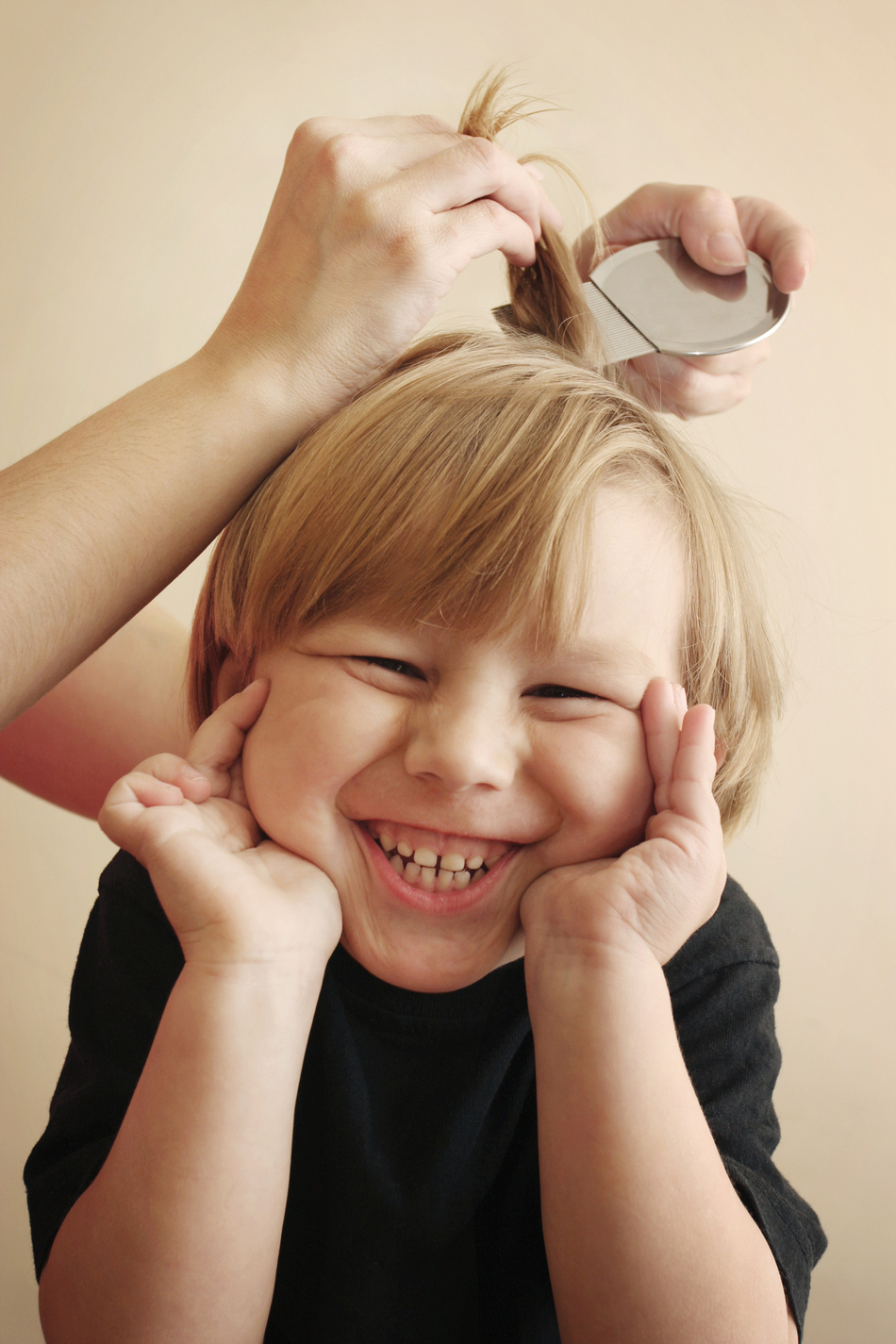
Dr. Gellner: Lice seems to a big problem during the school year for kids. What really are lice and what can you do if your child comes home with these new friends? I'm Dr. Cindy Gellner, and I've got the lice-busting tips for you on today's Scope.
Announcer: Keep your kids healthy and happy. You are now entering "The Healthy Kids Zone," with Dr. Cindy Gellner, on The Scope.
Dr. Gellner: Every year, there are a few months where the number of kids with lice concerns seems to increase. Sometimes you'll find out about these outbreaks when your child brings home a note from school, or you see them scratching their head a lot and when you look, there's a tiny gray bug crawling in their hair. It's pretty gross.
These suckers move fast and they can be hard to see. They live in the hair, and they feed off your child's blood. They lay teeny, tiny, white eggs called nits, which they stick to the hair itself. There are usually lots of nits and, unlike dandruff, they don't come off in flakes. The back of the neck is the favorite area for lice and nits. While lice can live only on humans, they can be spread quickly when kids share hats, combs, or hairbands, or simply by being in very close contact. They can even crawl into bedding or towels.
And lice don't discriminate. Anyone can get them, even if they are uber clean. The good news is that nits don't transmit lice. Only live lice can bounce from person to person. Using over-the-counter lice shampoos is a great way to kill both the lice and the nits. Be sure you follow the instructions on the package exactly, for best results.
Once you kill the lice, use the lice comb that came with the kit. I'll warn you, it's time-consuming. But it's important to remove the nits so people don't think your child still has lice. If your child has been treated with the lice medication, it's okay for them to return to school, even if they have nits. This was a big issue in the past, but the American Academy of Pediatrics and the National Association of School Nurses recommend that all "no-nit" policies be abandoned.
There is some good news. While nits can live for two weeks, lice can't live for more than 24 hours off the human body. This gives you plenty of time to go into "lice removal mode." Vacuum your child's room well, soak their hair brushes and bands for one hour in a solution made with the anti-lice shampoo, wash all the bedding in hot water, and any items that can't be washed can be sealed in a plastic bag for two weeks, until the nits are dead.
Since lice is pretty contagious, make sure all the heads in your family are checked and treat them if they start scratching. Luckily, lice don't carry any other diseases, but they can be stubborn. If you're having a hard time getting rid of these pests, talk to your child's pediatrician. We have options that may help.
Announcer: thescoperadio.com is University of Utah Health Sciences Radio. If you like what you heard, be sure to get our latest content by following us on Facebook. Just click on the Facebook icon at thescoperadio.com.

When Does Your Child Really Need Lab Work?
Parents often ask about blood tests during routine pediatric visits, but pediatrician Cindy Gellner, MD, clarifies that healthy children rarely need them. She shares some of the criteria for screenings in young patients and how insurance factors into decision-making.

What to Do When Your Baby Sounds Congested
Newborns cannot blow their noses, and they are not great at breathing through their mouths either—so even a little mucus can sound dramatic. Pediatrician Cindy Gellner, MD, shares what is normal when it comes to newborn sneezing and snorting, how to use saline and suction safely, and when to check in with your pediatrician.

Understanding Childhood Mood Disorders Beyond Bipolar
Is your child often irritable or prone to temper outbursts? Pediatrician Cindy Gellner, MD, clarifies the distinctions between bipolar disorder and Disruptive Mood Dysregulation Disorder (DMDD), emphasizing the importance of accurate diagnosis in childhood mood disorders.


More Answers to Your Questions on Keeping Your Kid Healthy and Happy
Latest trends and issues in children's health on the Healthy Kids Zone with Dr. Cindy Gellner
